A Backyard Chicken First-Aid Kit: The OTC Essentials
A backyard chicken first-aid kit you build before you need it. The over-the-counter basics I keep in my bin, what each one is for, and the isolation setup that saves birds.
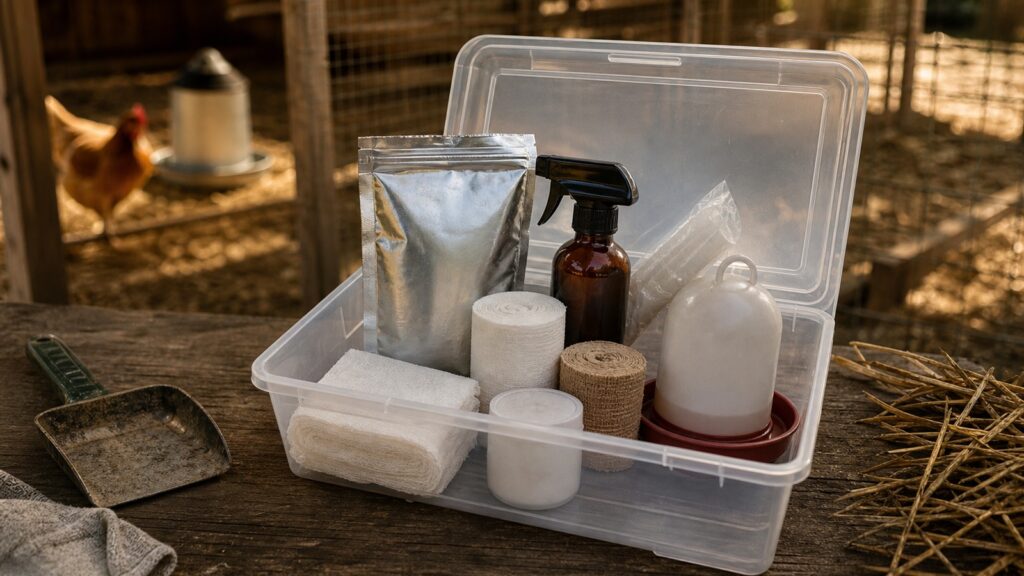
The first time one of my hens split a nail and started dripping blood across the run, I stood there in my pajamas at 6 a.m. with absolutely nothing useful in the house. I ended up cutting up an old dish towel and calling my neighbor Linda before the coffee even finished. That was year one. Now I have a plastic bin on a shelf in the garage labeled CHICKENS in marker, and I haven’t had a pajama panic since.
A chicken first-aid kit isn’t complicated and it isn’t expensive. Almost everything in mine is over-the-counter — the kind of thing you can buy without a vet’s prescription — because the goal here is to handle the small stuff calmly and to stabilize a bird long enough to get real help for the big stuff. Six years in, here’s exactly what I keep, what each thing does, and the one part everybody forgets until they’re standing in the run needing it.
First, a plain word about what this kit is for
This is a comfort-and-stabilize kit, not a veterinary clinic. I’m a six-year backyard keeper, not a vet, and I’ll never tell you a drug dose. What a first-aid bin does is buy you time and handle the ordinary scrapes: a broken nail, a bumped comb, a bird who got too hot, a little flock squabble that drew blood.
For anything past that — a bird who’s hunched and not eating for more than a day, labored breathing, a wound you can see muscle in, a suspected break — you want a vet who sees poultry, or your county extension office, or your state ag department’s diagnostic lab. Keep those three numbers taped inside the bin lid. Knowing who to call is itself part of the kit.
And keep it strictly over-the-counter. Prescription wormers and antibiotics belong in a vet’s plan for your specific birds, not guessed at from a bin in the garage. Everything below you can buy off a shelf.
Electrolytes — the thing I reach for most
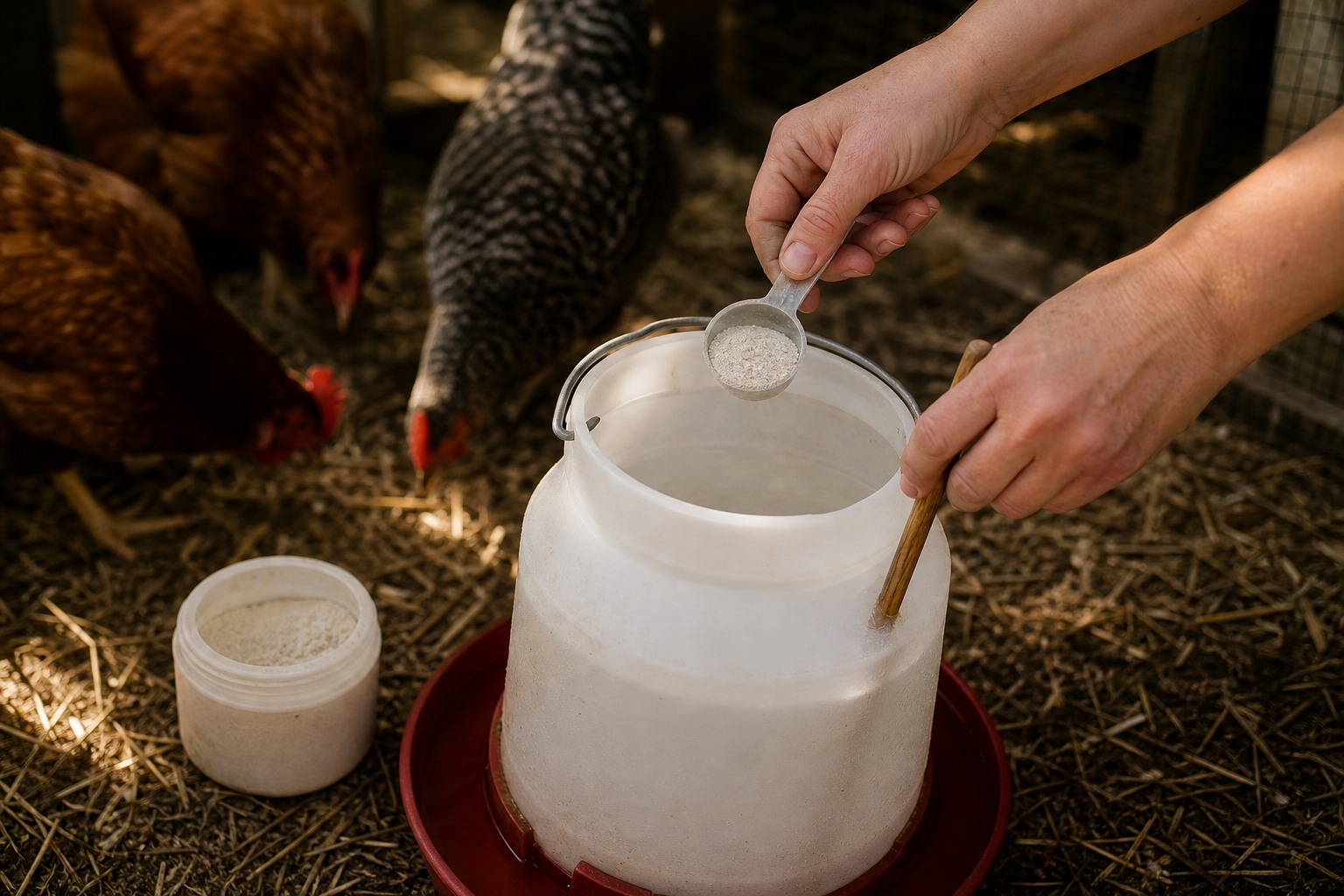
If you buy one item today, buy poultry electrolytes. A packet of Sav-A-Chick electrolytes mixed into the water does more everyday good in my flock than anything else in the bin. A Tennessee July is brutal on hens, and a panting bird loses fluids and minerals fast; electrolytes help her hold onto what she needs. I use them for heat waves, for new birds coming off a stressful car ride, and for any hen who just seems a little flat and low.
One honest limit: electrolytes are a support, not a cure. They help a stressed bird cope while the real fix — shade, cool water, rest, a vet if it’s serious — does the actual work. I don’t run them constantly either; a few days when it’s needed, then back to plain fresh water.
Wound care, the boring but essential middle of the kit
Most chicken injuries are small and bloody and look worse than they are. The basics that handle them, all OTC:
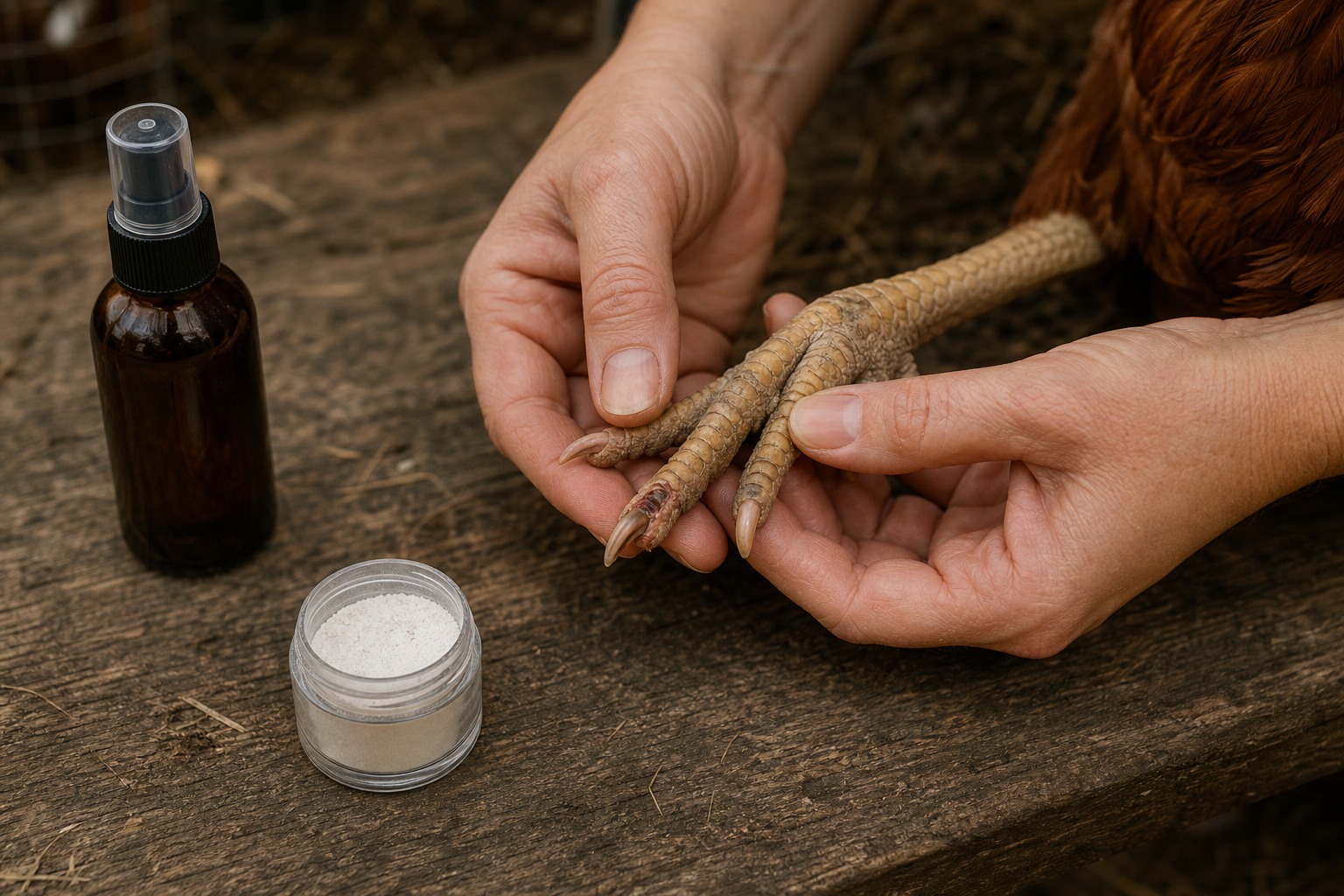
A wound and skin-care spray. A poultry-safe antimicrobial spray (the Vetericyn-type products keepers reach for) to clean a cut, a peck wound, or an early case of bumblefoot. Rinse the wound, spray, keep it clean. (Note: I link only products I can point you to a verified listing for, and I don’t have a confirmed link for a wound spray yet — buy a poultry-labeled OTC one at the feed store or online, and I’ll add a link here once I’ve verified one.)
Styptic powder to stop bleeding fast — a split toenail or a trimmed-too-close spur can drip alarmingly, and a pinch of styptic clots it in seconds. Cornstarch works in a true pinch, but the real thing is better.
Saline and clean gauze for flushing and covering. Plain sterile saline, a roll of gauze, and self-cling vet wrap that sticks to itself without pulling feathers. Vet wrap is the single most useful wrapping material for an animal that has no straight limbs to tape.
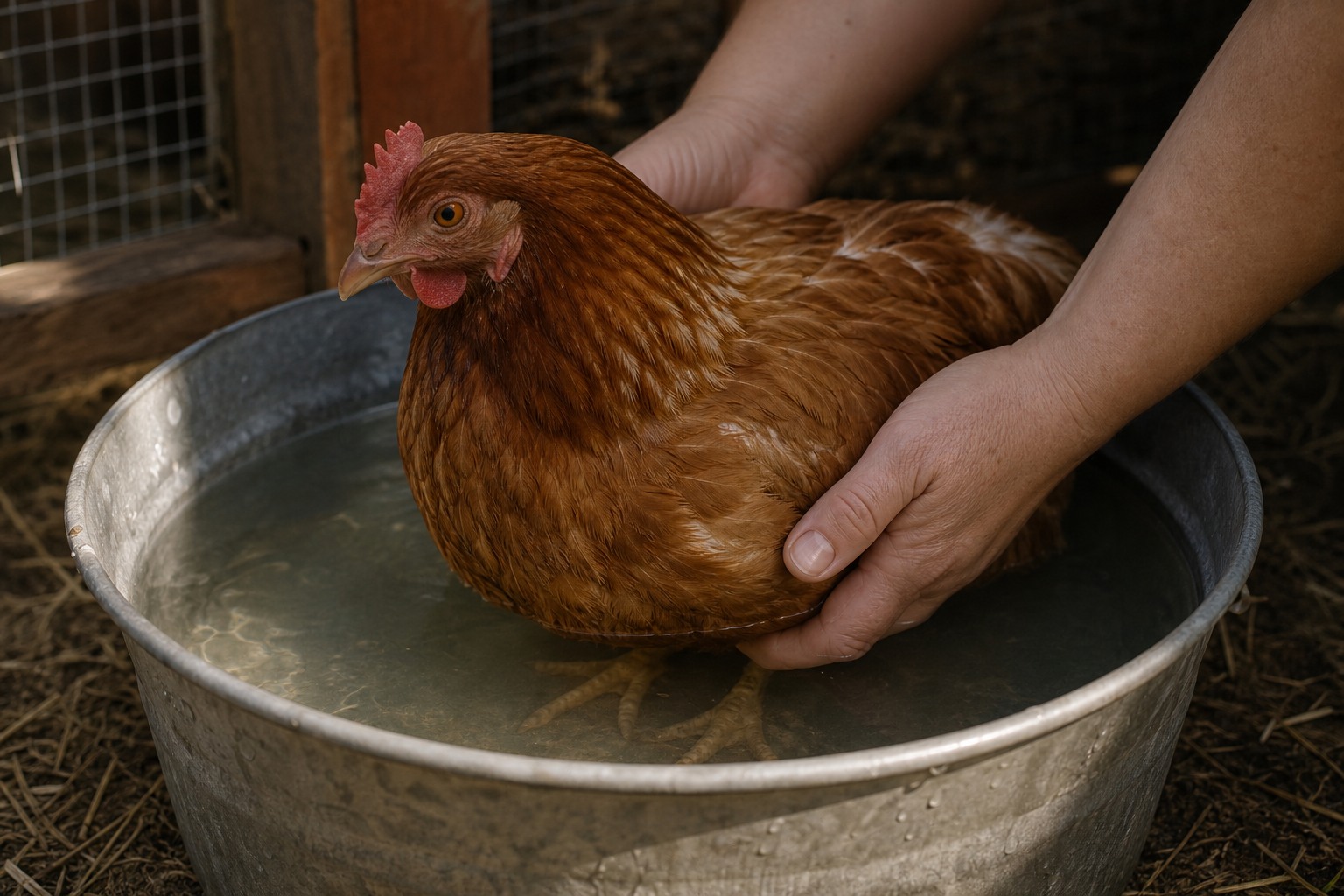
Plain Epsom salt for a warm soak — the standard first move for bumblefoot or a hen who’s egg-bound and straining. A warm Epsom soak relaxes and cleans; it’s gentle and it’s cheap.
I keep every one of those in the bin, and every one of them is available without a prescription. The wound spray and styptic are the two I’ve actually needed most.
The isolation setup nobody thinks about until they need it
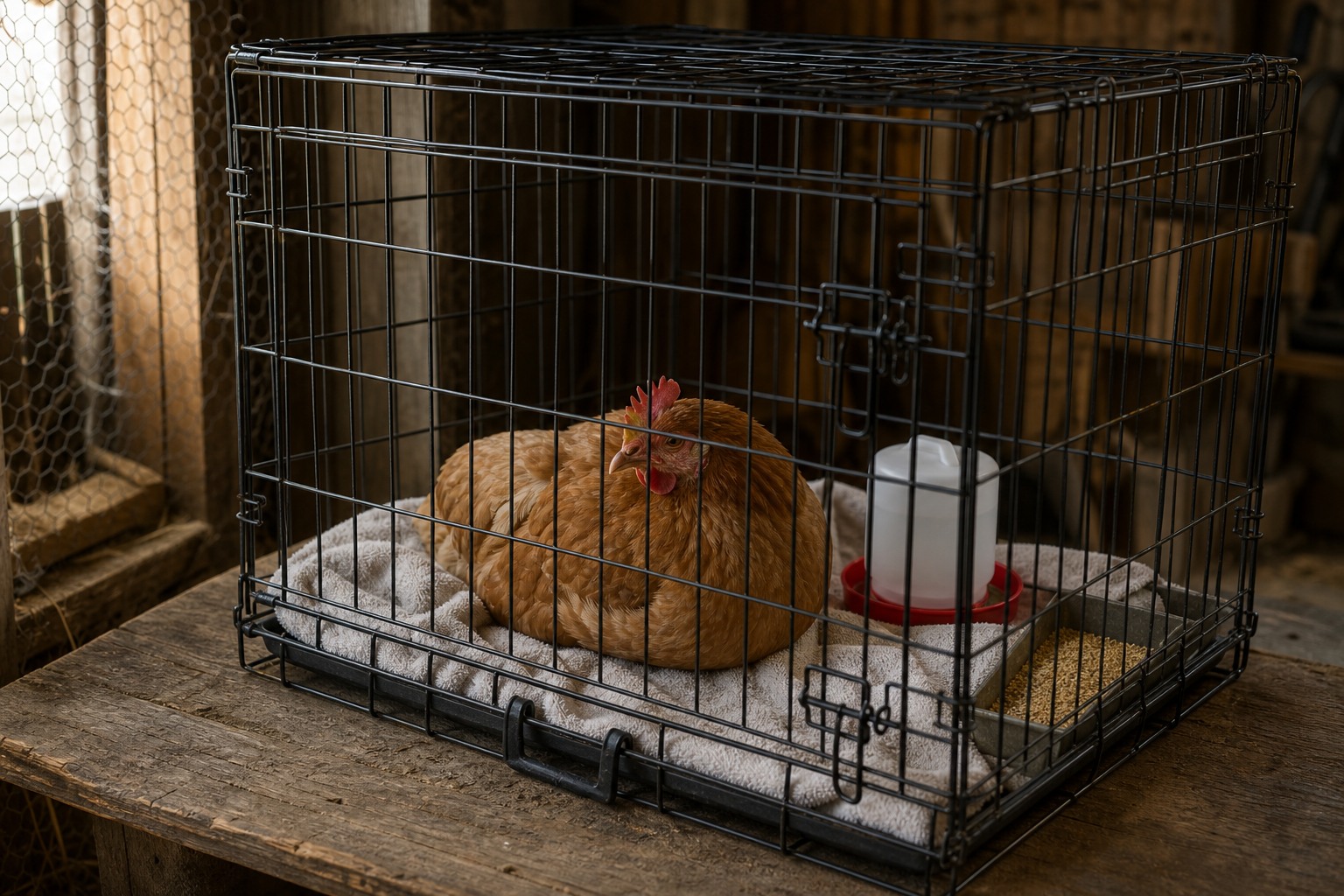
Here’s the part I missed for two full years: you need a place to put a hurt or sick bird, separate from the flock, ready to go. Chickens are relentless with a weak or bleeding flockmate — the sight of blood can turn the whole run on one hen in minutes. A bird that’s injured or ailing has to come out, fast.
My “hospital wing” is nothing fancy: a large dog crate, a towel or a flake of clean shavings on the bottom, a small feeder, and a small clean waterer that lives right there with the kit. I keep a spare nipple-and-cup waterer in the bin for exactly this — sealed and clean, so an isolated bird always has water she can’t tip, foul, or kick shavings into while she’s recovering. Set the crate somewhere quiet, dim, and out of the weather. Warm but not hot. Most minor cases turn the corner in a day or two of quiet, clean water, and a little food.
Learn from my two wasted years: build the crate setup before you have a bleeding hen, not during. The morning you need it, you will not want to be hunting for a crate.
Keep it stocked and keep it findable
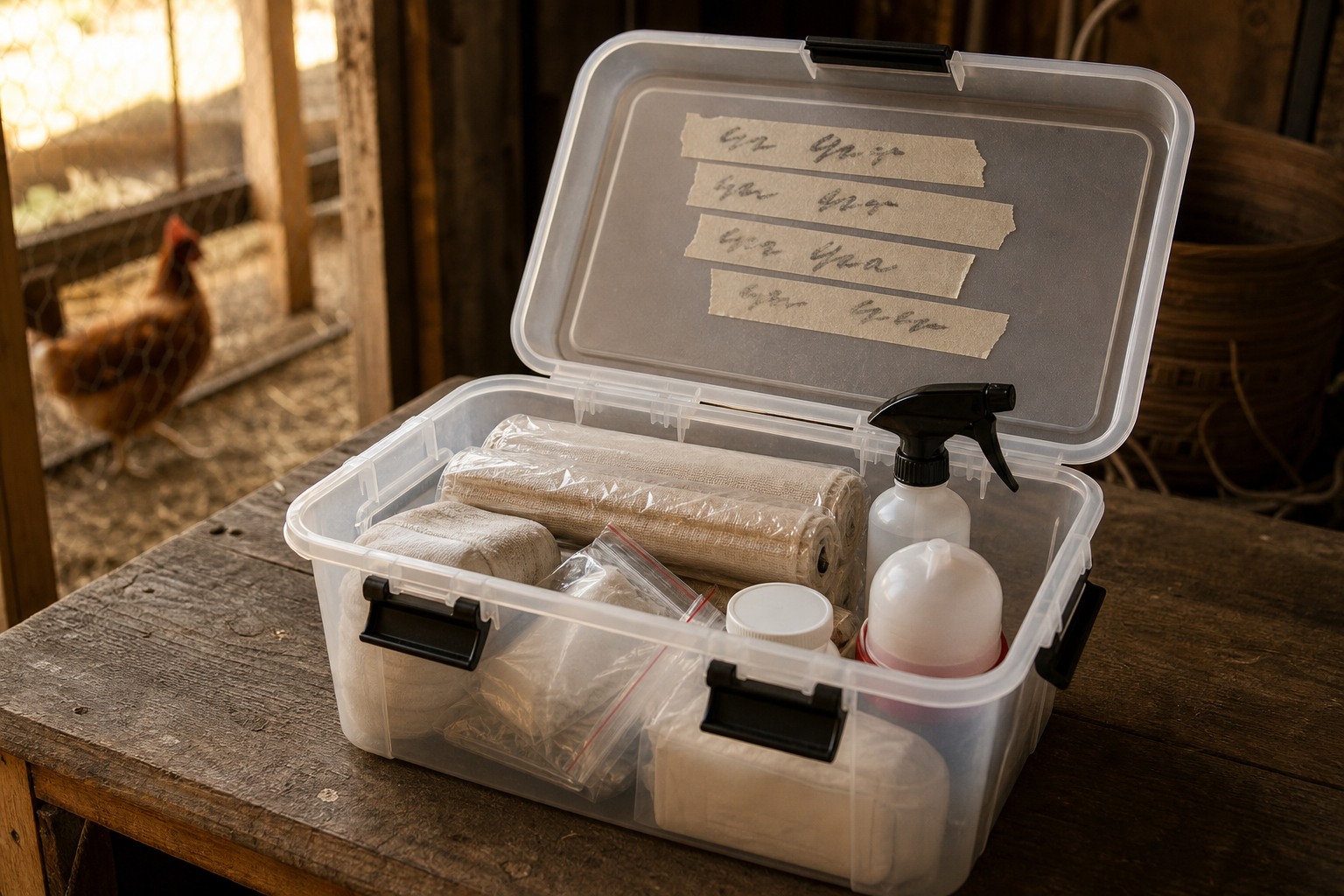
A first-aid kit only works if it’s ready. Twice a year — I do it when the clocks change, because that’s easy to remember — I pull the bin out, toss anything expired, and restock what I’ve used. The electrolytes get replaced most often because I use them most. Tape your vet, extension, and state-lab numbers inside the lid. Label the bin so your kids or your spouse can find it when you’re not home; my husband Kyle has had to grab it more than once during a heat spell while I was at the fairgrounds.
That’s genuinely most of it. A hurt chicken is stressful the first few times, but a stocked bin and a ready crate turn a panic into a routine. You clean the wound, you separate the bird, you give her quiet and clean water, and you make the call if it’s past your depth.
I go a lot deeper on flock health — reading a sick bird, the common first-year problems, when it’s a soak-and-wait and when it’s a call-the-vet — in my book, Raising Backyard Chickens for Beginners. This is the bin on the shelf. The book is how you learn to use what’s in it.
