The Best Self-Watering Planters for Small Spaces
The best self-watering planters for small spaces — the reservoir pot I trust on my balcony, the cheap way to make any pot self-watering, and the plants to keep out of one.
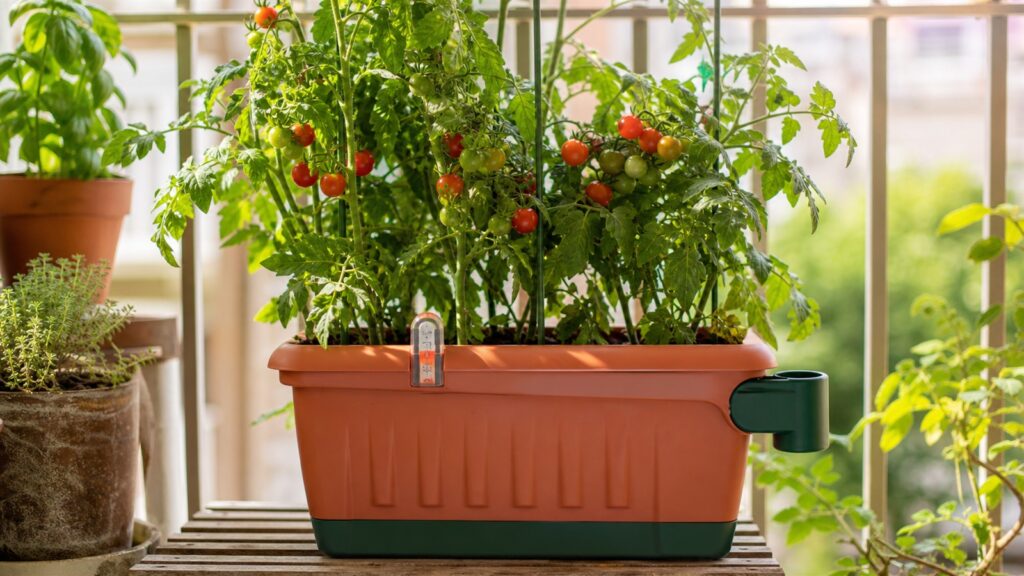
The single hardest thing about growing in containers isn’t sun, or soil, or bugs. It’s water. A pot holds a few quarts of soil sitting up in the air, and on a warm day it can swing from soaked to bone-dry between breakfast and dinner. Miss one hot afternoon and you come home to a wilted, sulking plant.
That’s the problem a self-watering planter solves, and it’s why I keep several on my little Portland balcony. They’re not magic — I’ll be honest about what they can’t do — but for the right plants, in a small space, they’re the closest thing to a safety net I’ve found.
Here’s what actually works, from the reservoir pot I trust to the few-dollar trick that turns a pot you already own into a self-watering one.
How a self-watering planter actually works
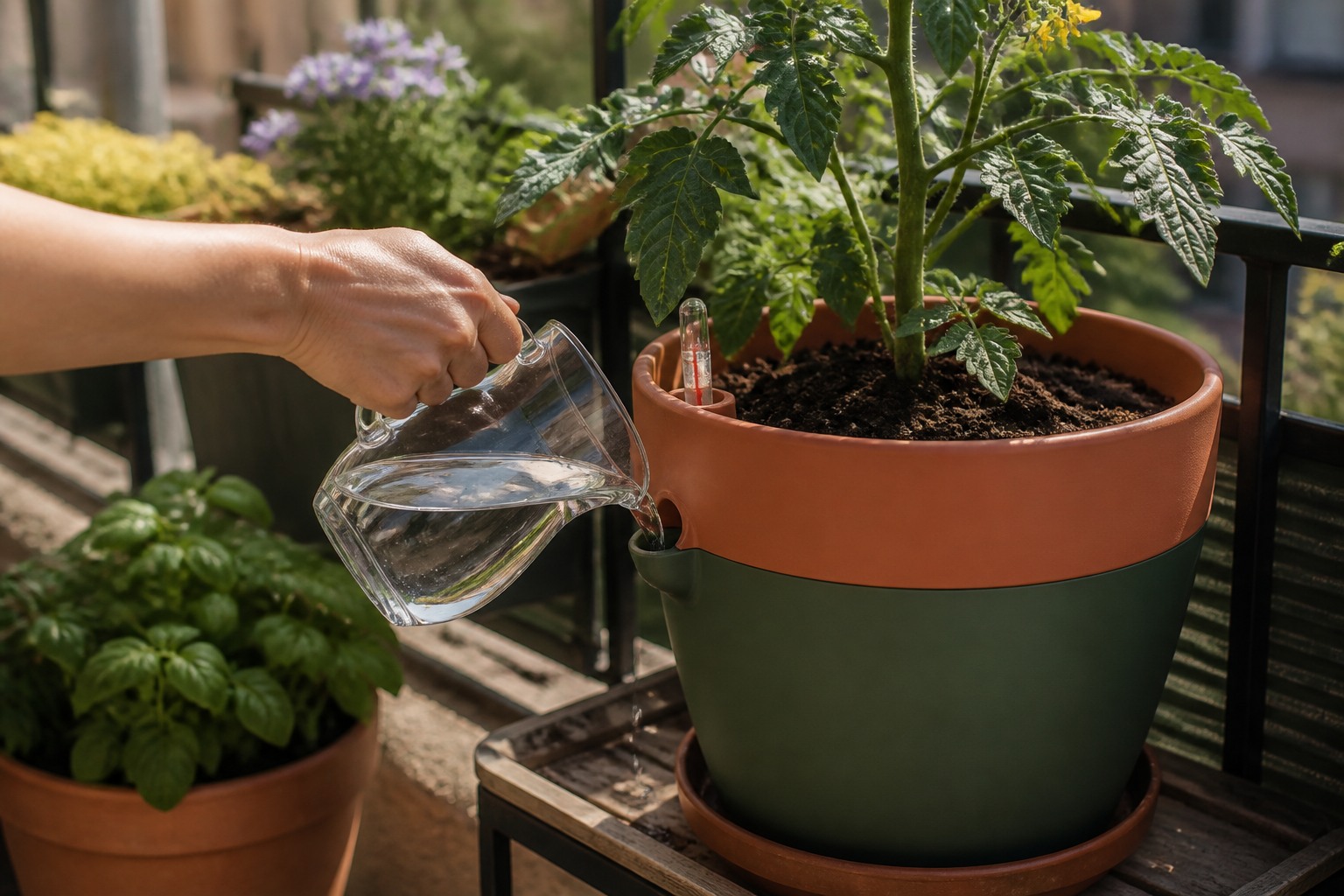
There’s no pump and nothing to plug in, which surprises people. A self-watering planter is just a pot with a water reservoir built into the base, below the soil. You fill the reservoir through a side spout, and the potting mix wicks moisture up from it as the roots drink — fast on a hot day, slow on a cool one. The plant takes what it needs, when it needs it.
A full reservoir buys you a day on a hot balcony, often two or three in milder weather. For a renter who works, or anyone who wants to leave for a weekend without drafting a neighbor, that’s the whole appeal.
One thing to know going in: these work by keeping the soil evenly moist, not soggy. That’s wonderful for some plants and quietly fatal for others, which is the part most reviews skip.
The reservoir planter — my pick for thirsty plants
For tomatoes, leafy greens, most flowers, and anything else that likes steady moisture, a true self-watering planter is the one I reach for first. The reservoir does the daily evening-out that I used to do by hand, badly, twice a day. My balcony tomatoes have never been happier than the summer I finally moved them into one.
Look for an honest reservoir size and a water-level indicator. A planter that holds a real reservoir — not a token half-inch — is what gets you through a hot day, and a little float gauge tells you when it’s empty without guessing. Pick a size up from what you think you need. A bigger soil volume holds more water and swings less, and in containers, bigger is almost always more forgiving.
And because the reservoir lives in the base, the pot needs an overflow hole so a hard rain can’t waterlog the roots. A good one has it built in; if yours doesn’t, drill one at the top of the reservoir line yourself.
Make any pot self-watering — the few-dollar version
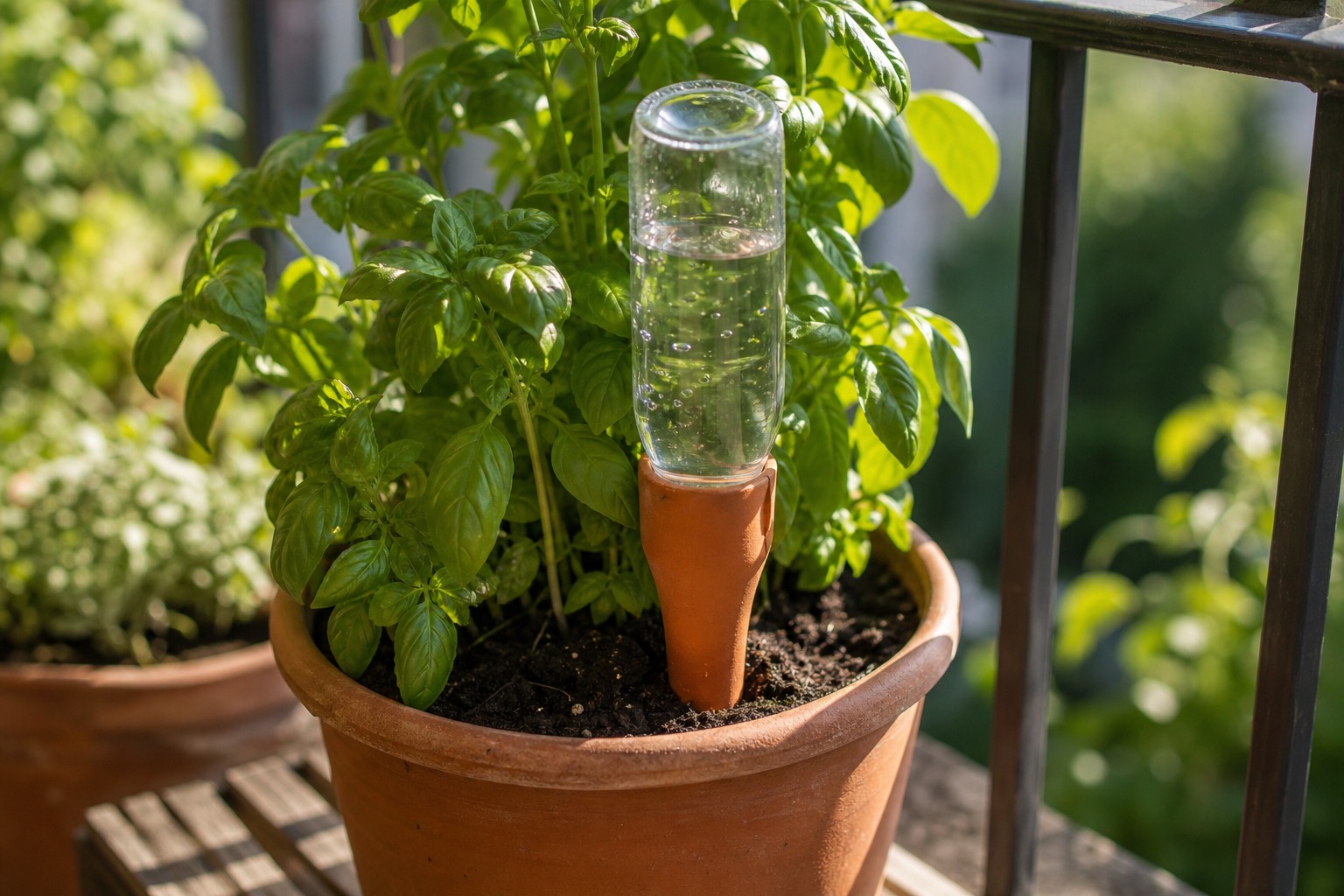
You don’t have to re-pot your whole balcony to get the benefit. For pots I’ve already planted and don’t want to disturb, terracotta watering spikes do a similar job for a fraction of the cost. You push the unglazed clay spike into the soil, invert a filled bottle into it, and the clay releases water slowly as the soil dries around it.
Soak the spike in water for an hour before its first use, or it’ll wick the whole bottle dry in a day and you’ll think it’s broken. It isn’t — it’s just thirsty.
This is also the renter-friendly answer. Spikes are portable and cost almost nothing, so they come with you when you move and you’re not committing to a shelf full of matching planters. A wine bottle and a clay spike turn a plain terracotta pot into a self-watering one for the price of a coffee.
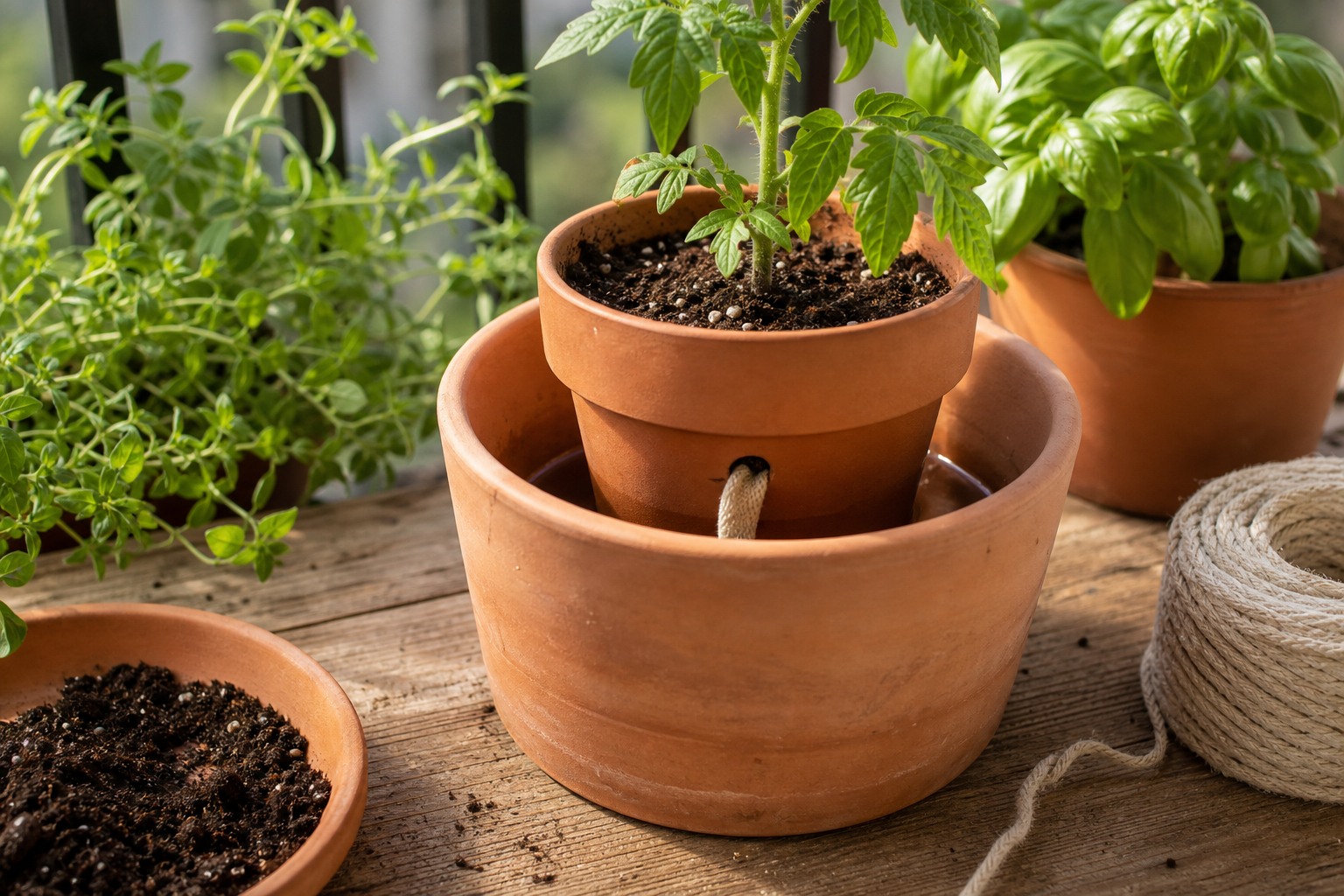
If you’re handy, the classic nested-pot wick system — one pot inside another with a fabric wick drawing from a water layer below — does the same thing for free out of two containers you already own. It’s a Saturday project, and it works.
The plants to keep out of a reservoir
Here’s the honesty the product pages won’t give you: self-watering planters are wrong for a whole category of plant.
Anything that hates wet feet will rot in a reservoir. Rosemary, lavender, thyme, sage, and most herbs from dry Mediterranean hillsides want their roots to dry out between drinks. Succulents and cacti, the same. Put those in a plain pot with sharp drainage and water them by hand with a long-spout can — they’ll thank you for the neglect.
I learned this the way I learn most things, by killing a perfectly nice rosemary that drowned slowly in a self-watering pot while I congratulated myself on never having to water it.
And fabric grow bags are the opposite of self-watering. I love my fabric grow bags for most of the season — the breathable sides keep roots healthy — but those same airy walls dry out faster than anything on the balcony. If hands-off watering is your goal, a grow bag is the wrong tool. Match the container to the plant and to how often you can actually show up.
Don’t let it lull you into drowning things
The one real risk with any self-watering setup is overwatering, because it’s so easy to keep topping up a reservoir on a cool, damp week when the plant isn’t drinking. A waterlogged root suffocates just as surely as a dry one shrivels.
A simple soil moisture meter settles it. Push the probe to root level, read dry-moist-wet, and only refill the reservoir when the soil up top has actually drawn down. The no-battery kind is all you want — I’ve never needed anything fancier, and it saved me from overwatering far more plants than it ever saved from drought.
So: a reservoir planter for the thirsty plants, a clay spike for the pots you already love, a plain pot for the herbs that like it dry, and a cheap meter so you don’t fuss. That’s a small-space watering system that holds up through a hot week and a long weekend away.
I go deeper on building a small-space garden that mostly takes care of itself — what to grow, in what, and how to keep it alive through a hot July — in Small-Space Big Harvest. This post is the watering shortcut. The book is the whole calm, productive balcony. (Otto, who considers any new planter a potential nap spot, fully endorses the larger sizes.)
